
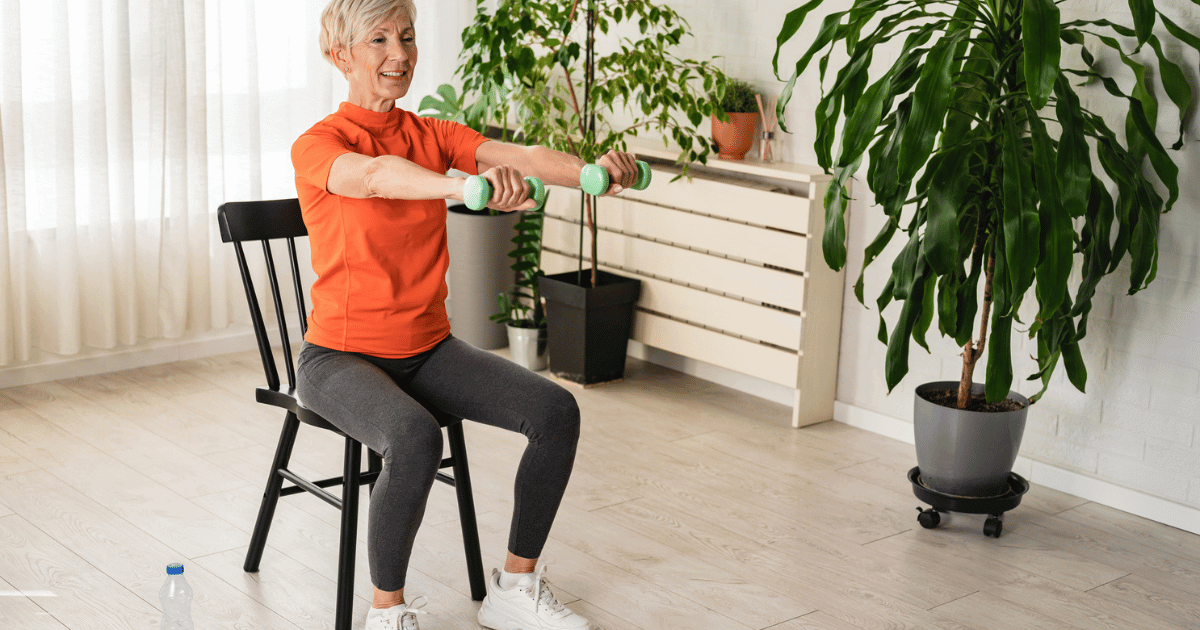
Staying active does not have to mean standing, walking, or using gym equipment. Seated and bed-based exercises offer a safe and gentle way to maintain strength and flexibility, even with limited mobility.
The Power of Low-Impact Movement for Seniors
These routines focus on improving movement, stability, and overall well-being without putting extra strain on the body. A few minutes of movement each day helps keep the body active, the mind alert, and the spirit strong.
- Supports joint health and mobility. Regular movement helps reduce joint pain and keeps muscles from tightening during long periods of sitting or bed rest.
- Maintains muscle tone and strength. Stronger muscles support better balance, which lowers the risk of falls and helps with daily tasks like getting out of a chair or reaching overhead.
- Improves balance and coordination. You can practice gentle movements that improve coordination and stability even while seated.
- Boosts circulation and mood. Movement increases blood flow, which brings oxygen and nutrients to the muscles and brain to prevent swelling, improve energy levels, and support heart health.
- Ideal for recovery and daily wellness. If you are recovering from illness, surgery, or injury, seated and bed exercises provide a gentle way to rebuild strength safely.
When you have built up endurance and strength, look at How to Incorporate Mobility Aids Into Daily Movement for more ideas.
Seated Exercise for Seniors
Chair-based workouts are one of the easiest ways to stay active and build strength without leaving home.
Full-Body Chair Workouts
Gentle chair workouts target the whole body while keeping movements light and manageable. They focus on flexibility and endurance to improve mobility and energy levels.
1. Marching in Place While Seated
- Sit tall with your feet flat on the floor.
- Lift one knee toward your chest, lower it, then lift the other (like marching in slow motion).
- As you lift each knee, swing the opposite arm forward, just as you would while walking.
- Continue for 30–60 seconds, rest, and repeat up to three times.
2. Seated Shoulder Rolls
- Keep your hands resting on your thighs.
- Slowly roll your shoulders forward in a circular motion five times, then reverse the direction.
- Repeat this sequence two or three times.
3. Toe Taps
- Sit near the edge of your chair with both feet flat on the ground.
- Alternate tapping your toes up and down on the floor, keeping your heels in contact with the floor.
- Tap for 30–45 seconds, rest for a few seconds, and repeat if you feel comfortable.
Strength and Core Building
Adding light resistance can make chair exercises more effective for maintaining muscle tone and balance. Using hand weights or resistance bands, you can strengthen your arms, legs, and core without needing to stand.
1. Seated Leg Raises
- Sit tall with your back straight and feet flat on the floor.
- Slowly extend one leg out in front of you until it is straight, hold for three seconds, then lower it back down.
- Switch legs and repeat.
- Do 10–12 raises per leg, rest, and repeat up to two sets.
2. Seated Back Squeeze
- Sit up straight, tighten your stomach muscles, and gently pull your shoulder blades together as if you are trying to hold a pencil between them.
- Hold for three seconds, then release.
- Repeat 10–15 times, resting briefly between sets.
3. Arm Exercises
- With a light dumbbell or water bottle in each hand, keep your elbows close to your sides.
- Curl your hands toward your shoulders for bicep curls, or lift your arms straight out to the sides for lateral raises.
- Move slowly and with control.
- Perform 8–10 repetitions of each movement, rest, and repeat one to two times.
Balance and Posture Focus
Balance training helps prevent falls and supports confidence in movement. Even while seated, you can work on improving coordination and alignment through controlled, core-focused motions.
1. Alternating Knee Lifts
- Sit upright with your feet flat on the floor and hands on your thighs for support. Lift your right knee toward your chest, hold for two seconds, then lower it.
- Repeat with your left knee.
- Do 10–12 lifts per side, rest, and repeat once more if comfortable.
2. Side Bends
- Sit tall with your feet flat and hands resting gently at your sides. Slowly lean to the right, reaching your hand toward the floor while keeping your opposite shoulder lifted.
- Return to the center and repeat on the left side.
- Do 8–10 bends per side, pausing briefly between each movement to maintain control.

Bed-Based Exercises for Seniors
Bed exercises provide a gentle way to maintain strength, flexibility, and circulation from the comfort of your bed. These routines are especially helpful for recovery days, early mornings, or for those with limited mobility.
Gentle Mobility Exercises
Mobility exercises keep joints flexible and muscles awake, even before getting up for the day. They are perfect for seniors who want to start slow or are recovering from illness or injury.
1. Ankle Circles
- Lie on your back with legs extended.
- Slowly rotate your feet in small circles, five times clockwise and five times counterclockwise.
- Repeat the set two or three times to improve circulation and loosen stiff joints.
2. Heel Slides
- With one leg straight, slowly bend the other knee and slide your heel toward your hips, keeping your foot on the bed.
- Straighten your leg again and repeat.
- Do 10–12 slides per leg, resting briefly between sets.
3. Light Stretches
- Reach both arms overhead as you inhale, then relax them down by your sides as you exhale.
- Repeat this 5–10 times to stretch your shoulders and back, gently waking up your muscles.
- This movement can be done either lying on your back or sitting up.
Strength and Circulation Routines
Strength-focused movements in bed help maintain endurance and improve circulation to help reduce the risk of stiffness and swelling.
1. Glute Squeezes
- Lie on your back with knees slightly bent.
- Tighten your glute muscles (buttocks), hold for five seconds, and then relax.
- Repeat 10–15 times, resting for a few seconds between squeezes.
2. Mini Bridges
- Lie on your back with knees bent and feet flat on the mattress.
- Press through your heels to lift your hips a few inches off the bed.
- Hold for three to five seconds, then lower slowly.
- Do 8–10 bridges, resting between sets as needed.
3. Arm Lifts With Light Resistance
- Lying on your back, hold small hand weights or water bottles at your sides.
- Lift both arms toward the ceiling, keeping a slight bend in your elbows, then lower slowly.
- Perform 10–12 repetitions, rest, and repeat up to two sets.
Tip: If you find it difficult to lift both arms while lying flat, prop your upper body slightly with pillows or adjust to a reclined seated position for better comfort and control.
Flexibility and Relaxation
Evening stretches and calming movements help unwind the body and mind by relieving joint pressure and muscle tightness.
1. Knee-to-Chest Stretch
- Lie on your back and bring one knee toward your chest, holding it gently with both hands.
- Hold for 10–15 seconds, release, and switch sides.
- Repeat two or three times per leg.
2. Bed Yoga Pose – Reclining Twist
- With knees bent, slowly drop both knees to one side while keeping your shoulders on the bed.
- Hold for 10–20 seconds, then bring your knees back to the center and switch sides.
- Repeat two or three times per side.
3. Deep Breathing
- Take a slow, deep breath through your nose, hold for two seconds, then exhale through your mouth.
- Continue for one to two minutes, focusing on relaxing your shoulders and back.
Tips for Safe Home Exercise
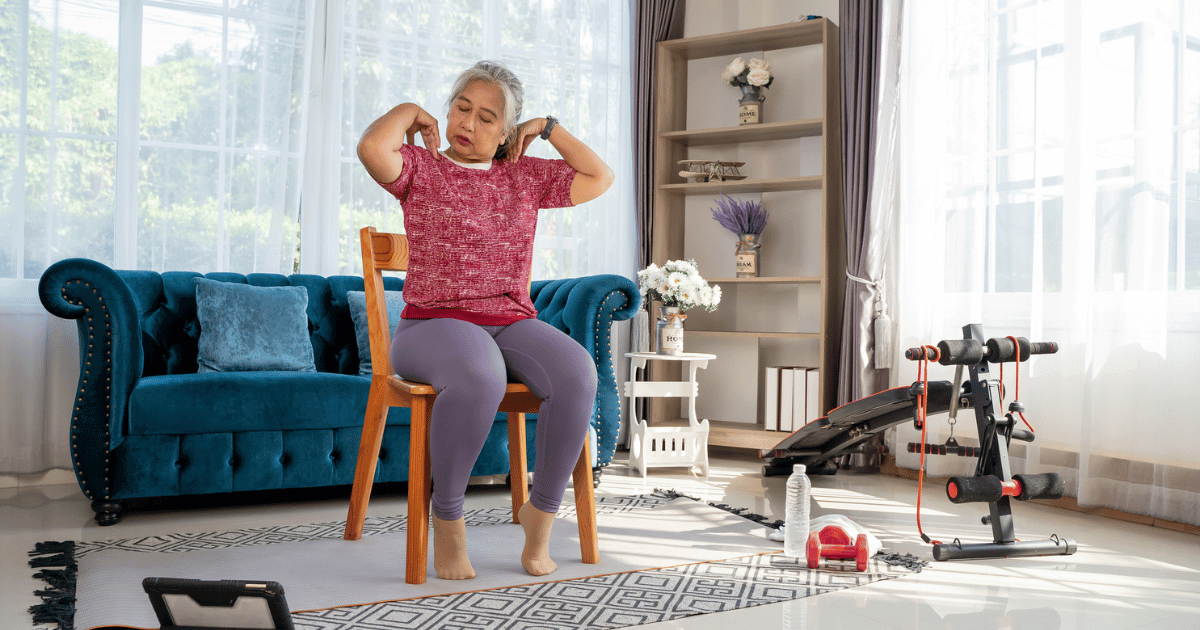
Whether you are seated in a chair or lying in bed, a few precautions help make your workouts both safe and effective.
- Start slow and build consistency. Begin with short sessions and gentle movements, especially if you are new to exercise or returning after an illness or injury. Gradually increase your time and repetitions as your strength and confidence grow.
- Use a sturdy chair or a supportive bed surface. Select a stable chair without wheels or armrests for seated exercises, and ensure your bed provides enough support for balance and control.
- Keep resistance bands, light weights, and water nearby. Having your exercise tools within reach makes it easier to stay consistent.
Consult with a healthcare provider or physical therapist before starting any new exercise routine. Especially if you have health conditions, limited mobility, or are recovering from surgery. They can recommend safe movements tailored to your needs and abilities.
Movement That Meets You Where You Are
Staying active does not have to mean standing for long periods or following complex routines. Simple seated and bed-based exercises make it possible to strengthen your body, improve balance, and boost circulation, no matter your mobility level.
At Keystone Health, our goal is to help every senior live an active and comfortable life. Whether you need a personalized exercise plan, support from a physical therapist, or ongoing home care, our team is here to guide you safely toward better strength, flexibility, and quality of life.
Contact Keystone Health to learn how home-based care and physical therapy services will help you stay strong, steady, and engaged every day.

