

As people age, natural muscle loss and slower reflexes make maintaining balance more challenging. This is a normal part of aging, but it can increase the risk of falls without regular strength and balance training.
Why Falls Become More Common As We Age
Falls become more common with age because several physical changes occur.
- Reduced muscle strength. Muscles naturally lose size and power with age. When leg muscles weaken, it becomes harder to lift the feet, climb stairs, or recover from a stumble.
- Weaker core stability. The core helps keep the body upright and centered. When core muscles weaken, posture suffers and balance becomes harder to control during daily movement.
- Slower reaction time. Reflexes slow as the nervous system ages. If the body takes longer to react, it is harder to regain balance quickly when tripping or shifting weight.
The Role of Muscle and Balance Together
Balance does not rely on a single muscle or movement. It depends on strength and coordination working together throughout the body.
Strong legs support standing and walking. Strong hips help control side-to-side movement. A strong core keeps the body aligned and steady. This is why strength training plays a key role in balance training for older people.
How Balance and Strength Training Reduce Fall Risk
When muscles respond more quickly and movements feel more controlled, everyday activities become safer and less stressful.
Improved Stability and Coordination
Balance exercises train the body to stay steady during movement, not just while standing still. Over time, the body learns how to adjust weight, posture, and foot placement more smoothly.
- Better control during walking and turning. Stronger legs and improved coordination make it easier to change direction without losing balance. This helps reduce sudden wobbles or hesitation while walking.
- Safer transitions. Moving from a sitting to a standing position, stepping onto stairs, or getting out of bed requires balance and strength to work together. Balance training helps these transitions feel more controlled and predictable.
Stronger Muscles for Daily Tasks
Strength training builds the muscle support needed for everyday tasks that often lead to falls when strength is low.
- Carrying groceries. Strong arms, legs, and core help manage added weight without throwing off balance.
- Getting in and out of chairs. Leg and core strength make standing up and sitting down smoother and more stable.
- Navigating uneven surfaces. Strong muscles respond faster when walking on grass, gravel, or uneven floors, helping the body stay steady.

Safe Balance and Strength Exercises for Seniors
Balance exercises do not need to be complicated or risky to be effective. Small, controlled movements done consistently can improve stability, confidence, and coordination without putting stress on the body.
Here are a few tips:
- Aim for controlled, slow movements. Moving slowly gives muscles time to engage fully. This improves stability and reduces strain on joints.
- Focus on form over repetitions. Good form matters more than the number of times an exercise is performed.
- Use sturdy support surfaces. Choose a solid chair, counter, or wall for balance support. Avoid lightweight furniture that can move or tip.
- Wear supportive footwear. Shoes with good traction help prevent slipping. Avoid socks on smooth floors during exercise.
- Remove tripping hazards. Clear the area of loose rugs, cords, or clutter. A clean space makes movement safer and more comfortable.
- Stop and rest if you feel dizzy, lightheaded, in pain, unsteady, or fatigued. Exercise should feel challenging but safe.
If you use a mobility aid for daily activities, read How to Incorporate Mobility Aids Into Daily Movement for ways to use it with your strength and balance exercises.
Standing Balance Exercises
Standing balance exercises help train the body to maintain stability during everyday movements.
Heel-to-Toe Stand
- Stand near a counter or chair for support.
- Place one foot directly in front of the other so the heel touches the toes.
- Hold for 10–20 seconds while keeping your eyes forward and your posture tall.
- Switch foot positions and repeat 2–3 times on each side.
Weight Shifts
- Stand with feet hip-width apart.
- Slowly shift weight to one foot.
- Hold briefly, then shift to the other foot.
- Perform 10 slow side-to-side shifts.
Seated Balance Exercises
These are ideal for beginners or low-energy days.
Seated Marching
- Sit upright in a sturdy chair with both feet flat on the floor.
- Slowly lift one knee a few inches off the ground.
- Hold for one second, then lower your foot back to the floor with control.
- Repeat on the other side.
- Complete 10 lifts per leg while keeping movements slow and controlled.
Seated Core Engagement
- Sit tall in a sturdy chair with both feet flat on the floor.
- Gently tighten your abdominal muscles as if you are bracing your stomach.
- Keep your shoulders relaxed and continue breathing normally.
- Hold the contraction for 5-10 seconds, without holding your breath.
- Relax and repeat 5 times.
For additional seated exercises, check out Easy Seated and Bed-Based Exercises.
Strength Training Exercises
Strength training supports balance by making movements more controlled and stable.
Chair Sit-to-Stand
- Sit near the front edge of a sturdy chair with both feet flat on the floor, hip-width apart.
- Lean slightly forward and push through your heels to stand up tall.
- Pause briefly at the top.
- Slowly bend your knees and lower yourself back into the chair with control.
- Complete 8–10 repetitions, rest for a short break, and repeat one more set if comfortable.
Standing Heel Raises
- Stand behind a chair or near a counter and hold on for support.
- Place your feet hip-width apart.
- Slowly lift your heels so you rise onto the balls of your feet.
- Hold for one second, then slowly lower your heels back to the floor.
- Complete 10-12 repetitions, rest, and repeat one more set if comfortable.
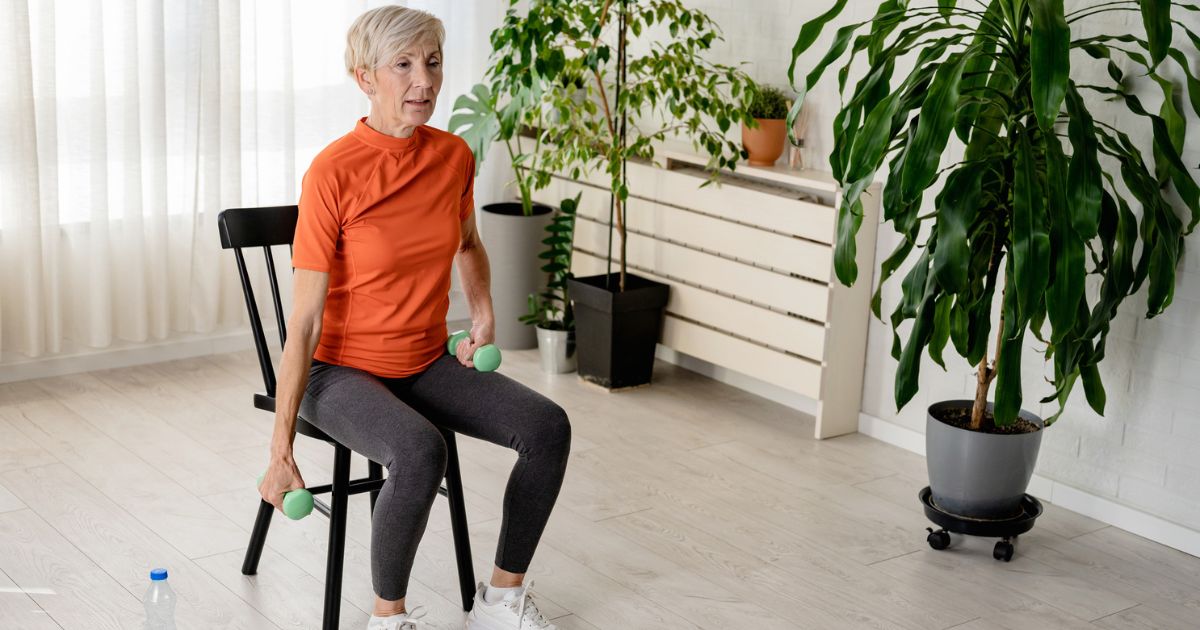
Bicep Curls (Seated or Standing)
- Sit in a sturdy chair or stand with feet hip-width apart.
- Hold a light weight (or a water bottle) in each hand with arms at your sides.
- Slowly bend your elbows and lift your hands toward your shoulders.
- Lower your arms back down with control.
- Complete 1-2 sets with 8-12 repetitions in each.
Seated Shoulder Press
- Sit tall in a chair with feet flat on the floor.
- Hold light weights at shoulder height with elbows bent.
- Slowly press your hands upward until your arms are mostly straight (avoid locking elbows).
- Lower back to the starting position with control.
- Complete 1-2 sets with 8-12 repetitions in each.
How Often Should You Practice Balance and Strength Exercises?
Consistency matters more than intensity. Regular movement helps the body build strength and improve balance without overexertion or strain on muscles or joints.
- Keep sessions short. Even 10 to 20 minutes at a time can make a difference. Short sessions are easier to maintain and feel less overwhelming.
- Balance work can be done daily. Balance exercises are low-impact and focus on control. Practicing a few simple movements each day helps reinforce stability and confidence.
- Strength training should be done 2 to 3 times per week. Muscles need time to recover between sessions. Spacing strength training allows muscles to rebuild and grow stronger.
- Rest and recovery are part of progress. Rest days help prevent soreness and reduce the risk of injury, so don't skip them!
For more home exercise ideas, read Simple Ways Seniors Can Stay Active, Strong, and Confident.
When Physical Therapy Can Make a Difference
Some seniors benefit from guided support, especially after a fall, illness, or sudden change in mobility. Physical therapy provides structure and safety during times when movement feels uncertain or uncomfortable.
Benefits of Physical Therapy
- Personalized exercise plans – Exercises are chosen based on individual strength, balance, and mobility needs. This helps avoid movements that feel unsafe or frustrating.
- Safe progression – Exercises are introduced gradually and adjusted as strength and balance improve. This reduces the risk of injury and supports progress.
- Confidence-building movement strategies – Physical therapists teach practical ways to move, turn, and transition more safely. This helps reduce the fear of falling and rebuilds trust in the body.
In-Home Physical Therapy Support
In-home physical therapy offers additional benefits by meeting you where you are most comfortable.
- Familiar, comfortable environment – Exercising at home removes distractions and helps you feel more relaxed and focused.
- Reduced travel and stress – Avoiding trips to clinics saves energy and reduces strain, especially for those with mobility limitations.
- Exercises tailored to your home environment – Therapy focuses on tasks you do every day, such as standing from a chair, walking through hallways, or navigating steps.
Keystone Health offers in-home physical therapy services designed to support safe movement, balance, and strength in the comfort of your home. For seniors who require additional support, this personalized approach can make daily life feel more stable and manageable.
Small Steps That Support Safer, Stronger Living
Balance and strength training do not require large movements or complicated routines to be effective. Small, consistent exercises can help improve stability, build muscle support, and reduce the risk of falls over time. These daily efforts make it easier to walk, stand, reach, and move with greater control.

